
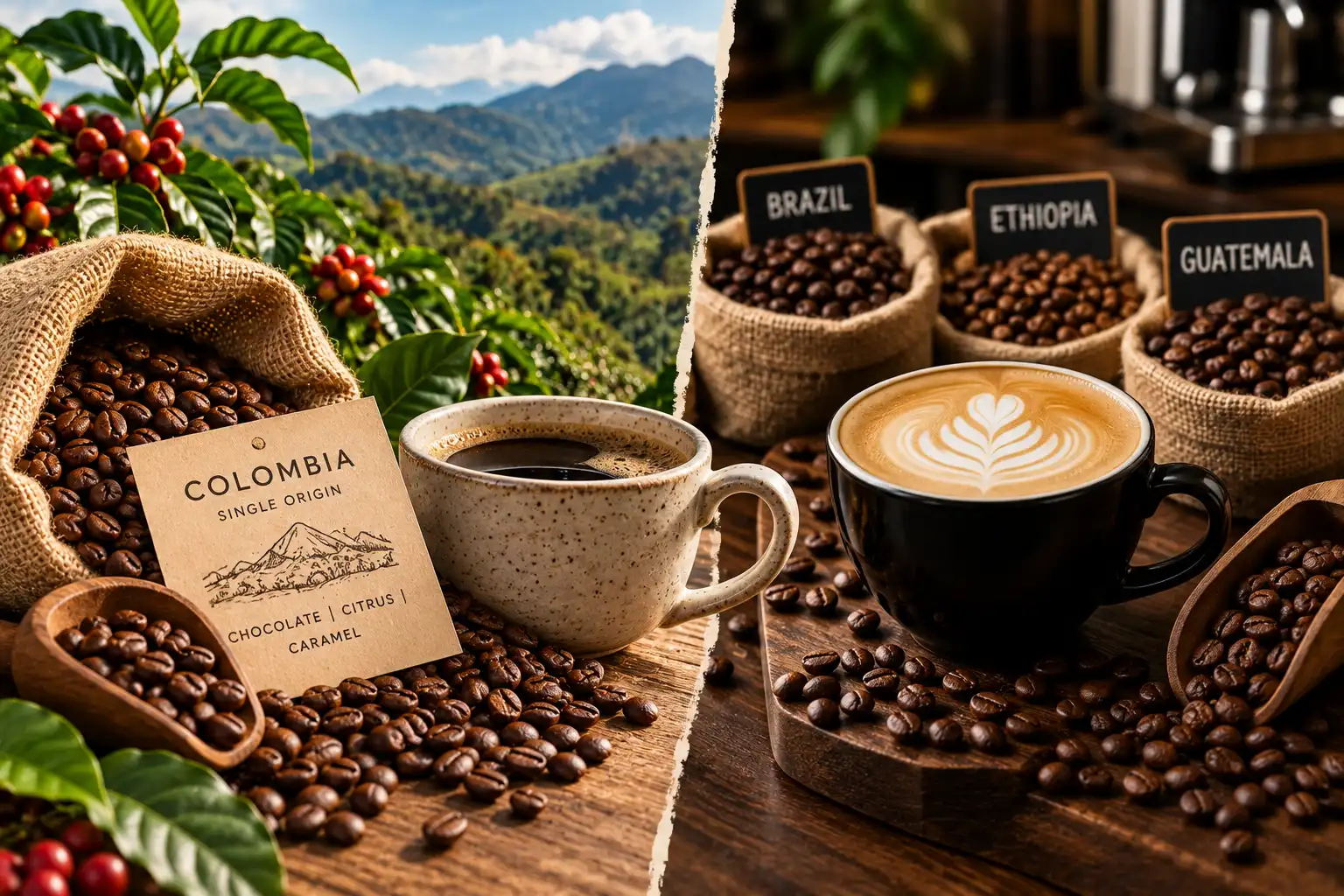
Scroll through any coffee menu or bag of beans and you’ll eventually run into these two terms: single-origin and blend. They sound like industry jargon, but the difference between single origin coffee vs blends is actually simple, and knowing it can completely change how you shop for coffee.
Here’s what each one means, and how to decide which is right for you.
What Is Single-Origin Coffee?
Single-origin coffee comes from one specific place, meaning one country, one region, or sometimes even one single farm. Nothing is mixed in.
Because the beans all come from the same growing conditions (soil, altitude, climate), single-origin coffee tends to have a distinct, consistent flavor profile that reflects where it was grown. A single-origin coffee from Ethiopia might taste fruity and floral, while one from Colombia might taste nutty and caramel-sweet. That flavor is shaped entirely by its origin.
Why people choose single-origin:
- You want to taste the specific character of a region
- You’re curious about how origin affects flavor
- You enjoy more complex, sometimes unexpected flavor notes
What Is a Coffee Blend?
A blend is exactly what it sounds like: beans from two or more origins, combined together. Roasters build blends intentionally, mixing beans with different flavor strengths to create a specific, balanced taste.
For example, a blend might combine a bright, acidic bean from one region with a heavier, chocolatey bean from another, to create a cup that’s more balanced than either bean would be alone. Blends are also built for consistency. Since coffee is an agricultural product, flavor can shift season to season. Blending lets a roaster maintain the same taste, cup after cup, year-round.
Why people choose blends:
- You want a consistent, reliable flavor every time
- You prefer a balanced cup over a bold, distinct one
- You’re ordering espresso drinks with milk (blends are often built to hold up well against milk)
Single-Origin vs Blends: Quick Comparison
| Single-Origin | Blend | |
|---|---|---|
| Source | One country, region, or farm | Two or more origins mixed |
| Flavor | Distinct, reflects its origin | Balanced, consistent |
| Consistency | Can vary by season/harvest | Designed to stay the same year-round |
| Best for | Black coffee, pour over, tasting origin character | Espresso drinks, milk-based drinks, everyday cups |
Does One Taste Better Than the Other?
Not necessarily, it really depends on what you’re drinking and how you like it.
Single-origin coffee tends to shine in simpler brewing methods like pour over or drip, where nothing masks its natural flavor. Blends tend to shine in espresso-based drinks, where the balance and body hold up better under milk and steam.
Neither is “higher quality” than the other. They’re simply built for different purposes.
Which Should You Order?
- Ordering a black coffee or pour over? Ask for a single-origin, it’s the best way to taste what makes that coffee unique.
- Ordering a latte, cappuccino, or anything with milk? A blend is usually the better call, it’s built to stay balanced under milk.
- Not sure yet? Ask your barista what’s currently being poured as single-origin, and compare it to the house blend. Tasting both side by side is the fastest way to figure out your preference.
Taste It for Yourself
We rotate single-origin options and keep a house blend on hand for exactly this reason, so you can explore and compare. Next time you’re in, ask what single-origin is currently available and try it next to your usual order.