
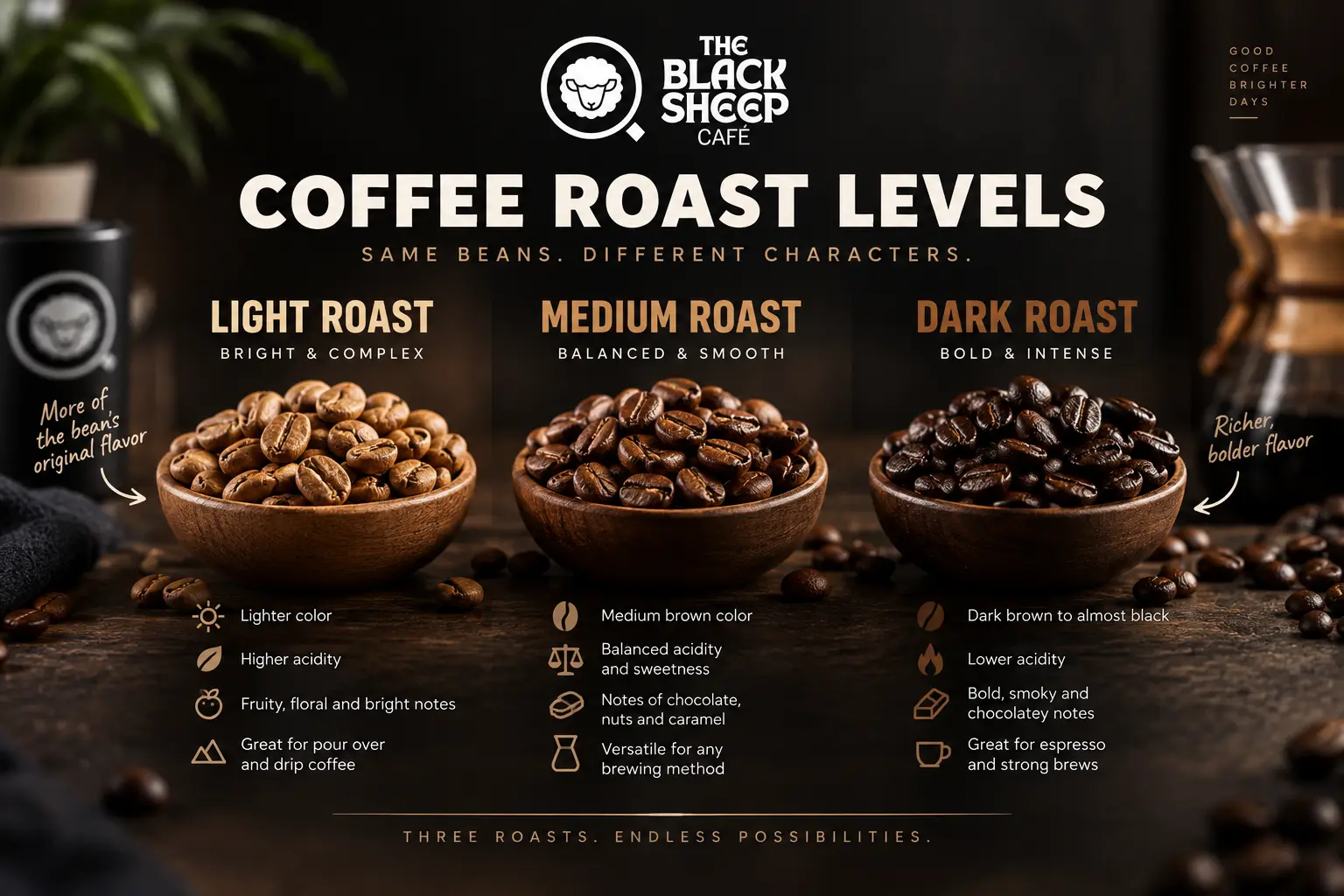
Standing in front of a bag of coffee, trying to decide between light, medium, and dark roast, can feel like guesswork. The truth is, roast level changes almost everything about how your coffee tastes, and it has nothing to do with the type of bean itself. Light, medium, and dark roast coffee all can come from the exact same beans. What changes is how long they’re roasted, and that single variable transforms the flavor completely.
Here’s what each roast level actually means, so you can order with confidence next time.
What Does “Roast Level” Actually Mean?
Roasting is what turns raw, green coffee beans into the brown beans you recognize. As beans roast, heat breaks down sugars and oils inside them, changing their color, aroma, and flavor. The longer beans stay in the roaster, the darker and more intense that transformation becomes.
So when you see “light,” “medium,” or “dark” roast coffee, that label is simply telling you how long the beans were roasted, and how far they were pushed.
Light Roast Coffee
Light roast beans spend the least time in the roaster. They’re light brown, dry to the touch (no oily sheen), and they preserve the most of the bean’s original character.
What to expect:
- Higher acidity, brighter and more complex flavor
- More of the bean’s original origin notes (fruity, floral, or citrusy, depending on where it’s from)
- Slightly more caffeine than darker roasts, since less is burned off during roasting
Light roast is a great choice if you enjoy tasting the subtle differences between coffee origins.
Medium Roast Coffee
Medium roast is the middle ground, and it’s the most common roast level you’ll find at coffee shops. The beans are a deeper brown, with a more balanced flavor profile.
What to expect:
- A balance between acidity and body
- Rounder, smoother flavor than light roast, without losing all origin character
- The most “classic coffee” flavor most people picture
If you’re not sure where to start, medium roast is usually the safest, most crowd-pleasing option.
Dark Roast Coffee
Dark roast beans spend the longest time in the roaster. They’re a deep brown to almost black, and often have a visible oily sheen on the surface.
What to expect:
- Bold, smoky, sometimes bittersweet flavor
- Less acidity than light or medium roast
- Origin character is mostly replaced by roast flavor (the beans start to taste more like “roasted coffee” than where they came from)
Dark roast is ideal if you prefer a heavier, bolder cup, or if you like your coffee with milk, since the bold flavor holds up well.
Light vs Medium vs Dark Roast: Quick Comparison
| Light Roast | Medium Roast | Dark Roast | |
|---|---|---|---|
| Color | Light brown | Medium brown | Dark brown / black |
| Acidity | Highest | Balanced | Lowest |
| Body | Lighter | Medium | Heaviest |
| Flavor | Bright, origin-forward | Balanced, smooth | Bold, smoky |
| Caffeine | Slightly higher | Moderate | Slightly lower |
Does Roast Level Change Caffeine Content?
Only slightly. Because darker roasts lose a bit of mass and density as they roast longer, a scoop of dark roast technically has marginally less caffeine than the same scoop of light roast, according to the National Coffee Association. That said, the difference is small enough that it usually isn’t the reason to choose one roast over another.
So, Which Roast Should You Try?
- New to specialty coffee or curious about origin flavors? Start with light roast.
- Want a reliable, balanced, everyday cup? Medium roast is your best bet.
- Love bold, rich coffee, especially with milk? Go dark roast.
There’s no wrong answer here, it’s entirely about personal taste. And the best way to find your favorite is simply to try all three side by side.
Taste the Difference at The Black Sheep
We roast and serve a range of options so you can explore what you actually like, instead of guessing from a bag on a shelf. Stop by and ask our baristas what’s currently brewing, they’re always happy to walk you through it.
Curious how brewing method changes things too? Check out our guide comparing cold brew vs iced coffee.